
Trust the Ancestors: The 30-Year Audit of a Biscuit
I have been trying to get this biscuit recipe right for almost thirty years.
It started when I was thirteen. I stumbled upon a quick biscuit recipe, and with my grandmother standing over me, helping me work through the steps, I found magic. Back then, I was the girl who could whip up a batch for my friends in an afternoon. I felt like the path was set; I was going to be a chef.
But life went left. I didn't become the English major or the chef I envisioned. I became an auditor. I traded the whisk for a spreadsheet, and for years, I told myself a lie: “I just can’t do pastries.” I figured that magic stayed behind in my grandmother’s kitchen.
Until last year.
For Christmas, my husband, The Naboo Protector, leaned into my vision and got me the gear to finally start creating—microphones, a tripod, the whole setup. These mics are the unsung heroes of my sanctuary; I’ve charged them maybe three times since December, and they just work. They are consistent. They are reliable.
If only the biscuits were that easy.
When I first sat down to record, I failed horribly. But an auditor knows that a failed test is just an invitation to look closer at the process. I called my mom, I went over to her house, and I ran the numbers again. But every time I got back to my own kitchen, the results would shift. One batch was perfect; the next was unrecognizable. I was chasing a ghost in the machine.

The Breakthrough: Reclaiming the Knead
I went back to the drawing board and started running small-batch tests to control the variables. I audited the butter temperatures, the fats, and the fold. I was playing with ratios—heavy cream versus buttermilk, frozen grated butter versus cubed—trying to find the perfect rise.
Then I realized where the system was breaking down: I wasn't trusting myself.
In my earlier attempts, I was so afraid of overworking the dough—afraid of making it "tough and ugly"—that I was barely touching it. I was getting flat, fluffy biscuits that had no structure. I realized that my grandma’s wisdom required a little more "vigor" than I was giving it. I had to stop being afraid of the dough and start leading it.
I learned that you have to stir that dough until it’s stiff and pulling away from the bowl. You have to turn it out and actually knead it—folding it from the inside out to build those layers. Once I decided to trust my hands and the process, the consistency finally arrived.

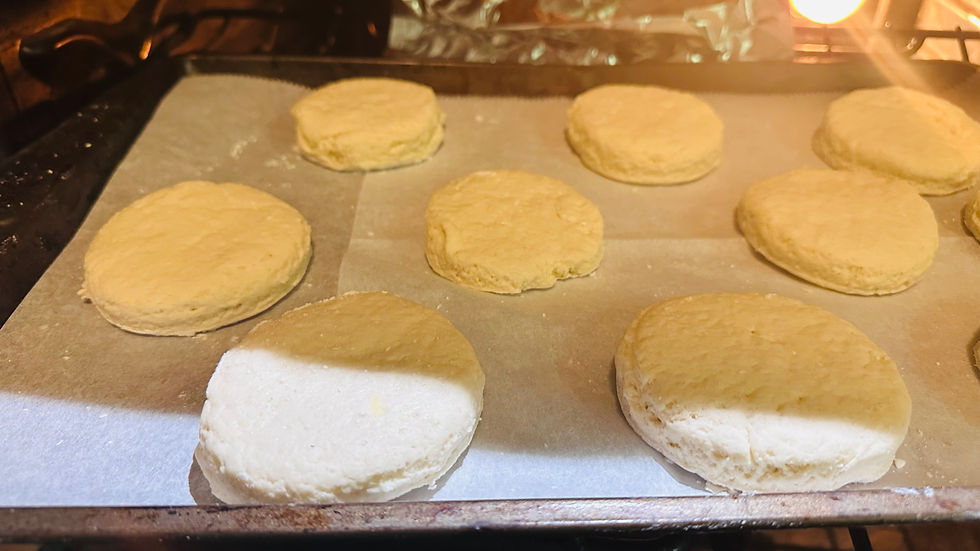


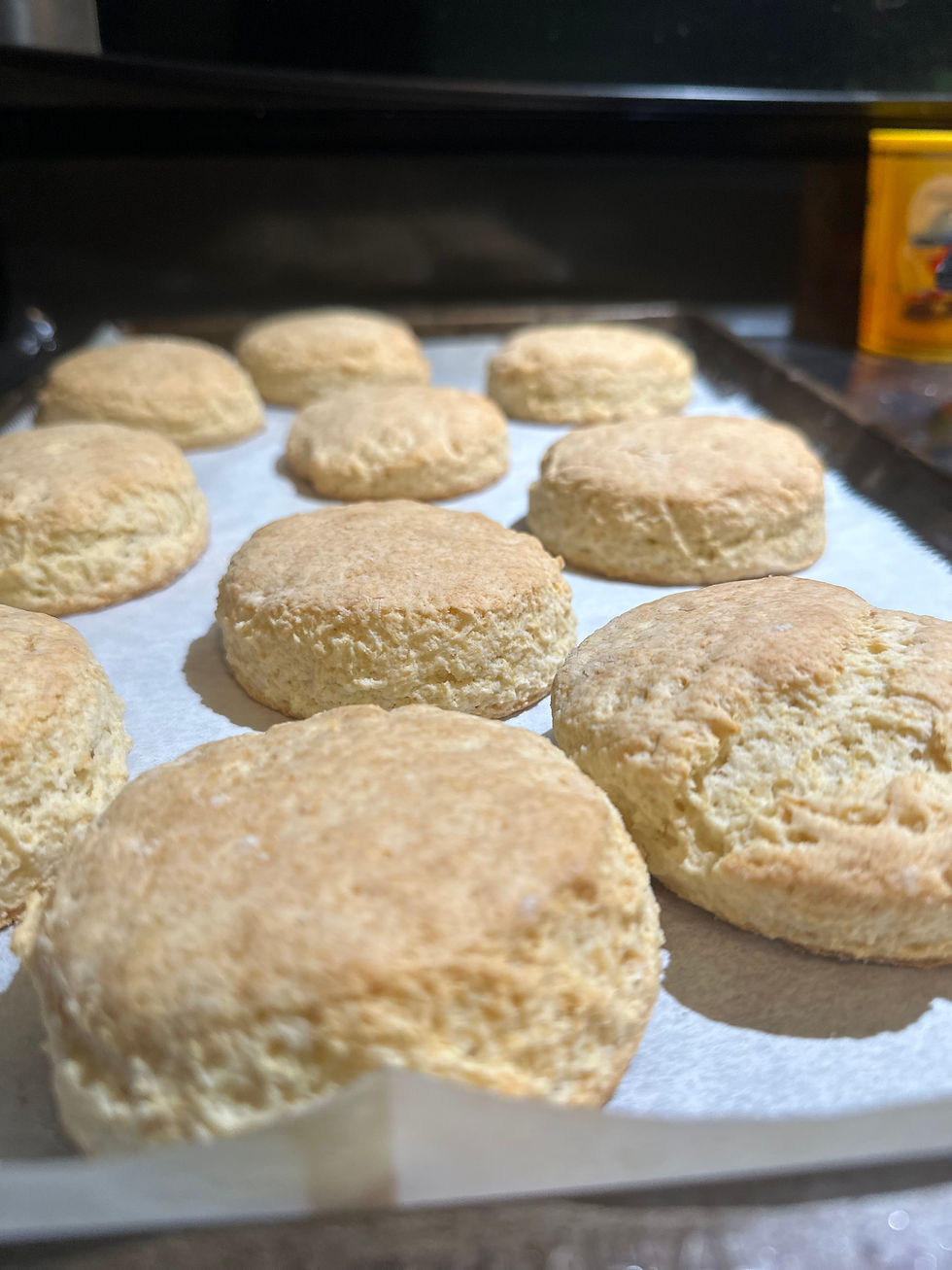
The "Sanctuary" Biscuit Protocol
The Ingredients:
• 3 cups self-rising flour
• 1/4 tsp flaky sea salt
• 1/2 tsp baking soda + 1 tsp cream of tartar (Sifted together first)
• 4 tsp baking powder
• 1 tbsp sugar
• 1 full stick of butter (Grated from a frozen stick)
• 1 1/4 cup buttermilk
• 1/2 cup heavy whipping cream
The Directions:
1. Preheat oven to 425°F.
2. In a large bowl, sift together all your dry ingredients: the flour, salt, sugar, baking powder, and the baking soda/cream of tartar mix. Everything needs to be perfectly incorporated before the fat hits the bowl.
3. Add your frozen grated butter. Use a pastry blender or—better yet—get in there with your fingers. Squeeze the butter into the flour mixture until it reaches a cornmeal texture.
4. Add your buttermilk and heavy cream all at once, scattering it over the dough. Grab a stout wooden spoon and stir vigorously. It’ll start soft, but don't stop; it should stiffen up and pull away from the sides of the bowl in 2–3 minutes.
5. Scrape the dough into a ball and turn it onto a lightly floured surface. Flatten it, then lightly knead by folding from the outside in 5 to 7 times. This is the secret to the layers.
6. Turn the dough fold-face down and roll it out to about 1/2 to 1 inch thick. Use your biscuit cutter and place them on parchment paper about half an inch apart on your cookie sheet.
7. Bake at 425°F for 18 minutes. Let them cool for five minutes before serving warm.
I’m no longer the girl who "can't do pastries." I’m the woman who audited her history and engineered her own rise. Sometimes you have to trust the process, but most of the time, you just have to trust yourself.


Comments